



Golang Development Services
Build, modernize, and scale high-performance Go software with a partner that combines deep Golang expertise with backend, cloud, network, and cybersecurity know-how.
Secure and scalable Go engineering for your needs
Apriorit helps technology companies create Go software for projects that prioritize performance, security, and reliability, from backend services and microservices to APIs and infrastructure tooling. We know how to combine Go with Rust, C/C++, Python, and other languages to find the best fit for your project.

When you partner with Apriorit, you get:
- Secure development, grounded in secure SDLC practices
- Engineering built for complex, high-load, distributed systems
- End-to-end delivery, from architecture to deployment and maintenance

Go development services we offer
What we build with Go
Microservices and distributed platforms
- Microservices-based applications
- Distributed services
- Event-driven systems
- API gateways
- High-concurrency systems

Network and infrastructure solutions
- Network management systems
- Network monitoring services
- Proxy and VPN services
- Traffic analysis systems
- Network automation services

Cybersecurity solutions
- Security monitoring and detection services
- Access control and policy enforcement services
- Identity and authentication services
- Security orchestration components

Data-intensive and real-time processing systems
- Event processing services
- Streaming data back ends
- Telemetry collection and processing systems
- Data aggregation services
- Concurrent data processing services

Blockchain solutions
- Blockchain infrastructure services
- Cryptocurrency back ends
- Transaction processing services
- Wallet-related backend components


Need secure, high-performance Go software?
Turn your idea into a production-ready solution with Apriorit’s full-cycle Go engineering services.
Golang tools and technologies we use

Gin

Echo

Revel

BeeGo

Fiber

Gorilla Toolkit
standard net/http

Chi

GORM

Goose
Atlas

gRPC

Kafka Go

NSQ

Consul

KrakenD

Go Kit
Micro
Testify

Gomega
Ginkgo
GoConvey
TestContainers

Docker

Kubernetes

Ansible

Helm
LiteIDE

Komodo

Go-swagger
gqlgen
Cli (urfave/cli)
pprof

OpenTelemetry

Prometheus

Grafana
govulncheck
gosec
staticcheck
Looking for alternatives?
Apriorit also brings deep expertise in other systems and backend languages.
Industries we serve
Engagement models we offer
Select an engagement model that best suits your business requirements and priorities.

Why choose Apriorit for Golang development?
01
Cybersecurity-focused Go engineering
Security is built in, from architecture planning to release. We combine Go expertise with secure SDLC practices, cybersecurity engineering, security testing, and code review.
02
Expertise beyond standard development
On top of web services, our engineers are also proficient in networking, cloud infrastructure, cybersecurity, distributed systems, and performance-sensitive software.
03
End-to-end R&D from one vendor
One team covers architecture design, backend development, QA, DevOps, security, deployment, and maintenance, so there is no need to coordinate multiple vendors.
04
In-house engineers ready to join your project
Every Apriorit engineer on your project is a permanent in-house staff member whom we can onboard quickly, giving you consistent quality and continuity as your team scales.
05
Cross-technology engineering expertise
We integrate Go cleanly with Rust, C/C++, Python, .NET, JavaScript, or system-level components already in your stack without re-architecting what already works.
06
Predictable delivery and long-term reliability
Full visibility into scope, risks, timelines, and quality — backed by established engineering, QA, and project management processes.
Why trust Apriorit
Apriorit brings decades of software engineering experience to every Go project.
Planning to build, scale, or modernize your Go-based product?
Our engineers can help you get there securely and efficiently.
Our Recent Golang development Projects and insights

Supporting and Improving Legacy Data Management Software
A client needed to keep a legacy data management system running reliably while extending it with new functionality ahead of platform migration. Apriorit’s engineers audited the existing codebase, developed and integrated new functionality, and provided ongoing support for the legacy software.
This approach kept the legacy system stable and functional throughout the transition and enabled the client to successfully migrate to their new platform.
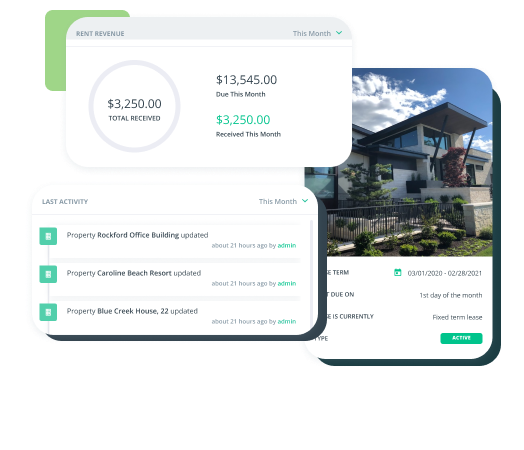
Building a Microservices SaaS Solution for Property Management
A property management platform required a scalable architecture capable of supporting multiple services, integrations, and growing business requirements. Apriorit designed and developed a microservices-based SaaS solution focused on flexibility, reliability, and long-term scalability.
The delivered architecture enabled seamless communication between services, simplified future expansion, and provided a strong foundation for product growth.
Building a Decentralized Blockchain Application for International Remittances
A FinTech client needed a blockchain-based platform to simplify and secure cross-border remittance payments. Apriorit designed a smart economy model tailored to the client’s vision and developed a user-friendly web wallet and decentralized application to support seamless transactions.
The result was a flexible, high-functionality remittance platform built to scale with the client’s business.
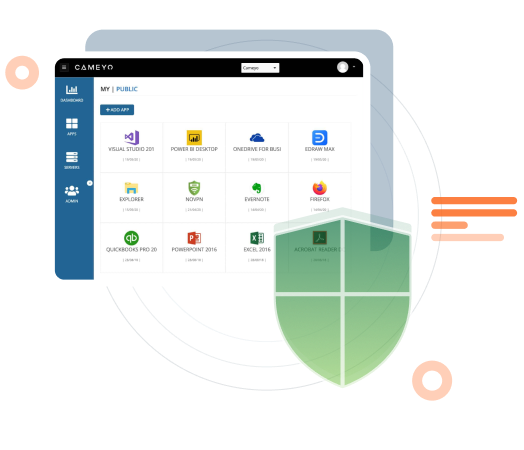
Enhancing Security and Performance of a Virtual Application Delivery Platform
A virtual application delivery platform needed new capabilities, tighter security, and smoother performance under load. Apriorit developed and integrated several custom features, hardened the platform’s security measures, and tuned performance-critical workflows to keep the platform running reliably at scale.
Working closely with the client’s in-house team, Apriorit established efficient development processes that supported the platform’s continued growth.

What our clients say about us
FAQ
What kinds of applications can I build using Go?
<p>Go is versatile enough to power a wide range of applications, including:</p>
<ul class=apriorit-list-markers>
<li>High-performance web servers</li>
<li><a href=/dev-blog/building-microservices-with-golang>Microservices</a></li>
<li>Backend services</li>
<li>Real-time systems</li>
<li>Networking solutions</li>
<li>Cloud-based applications</li>
<li><a href=/our-expertise/data-processing-development>Data processing</a></li>
<li><a href=/our-expertise/network-management>Network management</a></li>
<li><a href=/our-expertise/blockchain-development>Blockchain development</a></li>
<li><a href=/our-expertise/api-integration-services>API development</a></li>
</ul>
With Apriorit’s expertise, you can leverage Go to build secure, adaptable, and optimized solutions across various industries.
Is Golang a secure language?
<p>Yes. Go’s memory safety, garbage collection, and error handling help prevent common vulnerabilities, and its simplicity and static typing reduce the risk of mistakes.</p>
Apriorit builds on these foundations with secure-by-design practices throughout development, so your application and your clients’ data stay protected. Read more in our article on <a href=/glossary/golang-security>Golang security</a>
Which well-known companies use Golang?
Google, Dropbox, Netflix, Uber, and PayPal all use Golang to power high-performance, high-traffic systems. They are drawn to its speed, scalability, and concurrency model.
How does Golang handle scalability?
<p>Go is designed to be highly scalable thanks to its effective concurrency model and garbage collector. Key features that make Go scalable include:</p>
<ul class=apriorit-list-markers>
<li>Goroutines, which are lightweight threads that can be created and managed efficiently</li>
<li>Channels, which allow communication between goroutines</li>
<li>A low-latency garbage collector that doesn’t interfere with application performance</li>
</ul>
At Apriorit, we use Go’s concurrency strengths to design scalable architectures, allowing your applications to handle traffic increases, support microservices, and grow with your business needs.
What is the cost of outsourcing Golang development?
<p>The cost of Golang software development services can vary depending on a number of factors, including:</p>
<ul class=apriorit-list-markers>
<li>Project complexity</li>
<li>Experience of the development team</li>
<li>Hourly rate of developers</li>
</ul>
Outsourcing Golang development services can be a cost-effective way to get access to top talent and expertise. Apriorit offers flexible <a href=/white-papers/779-outsourcing-pricing-models>engagement models</a> to meet your specific needs.
Is Golang a good fit for cloud-native applications?
Yes. Go’s lightweight, compiled nature and low memory footprint make it well-suited for cloud-native applications, with strong support for containerization and platforms like Kubernetes and AWS. Apriorit’s Go team can help you build or migrate to cloud-native solutions optimized for modern cloud platforms.
Why choose Golang for building microservices over C# or Java?
While C# and Java have their own advantages, Go is especially effective for microservices because of its simplicity, speed, and concurrency model. These qualities reduce development time and improve performance. Go applications are lightweight, so they scale easily and start up quickly compared to applications written in heavier languages like Java or C#. With our expertise as a Golang development company, we can help you capitalize on Go’s advantages to build a microservices architecture that’s efficient, scalable, and optimized for high-demand environments.
Should I choose Go or Rust for my project?
<p>Choose based on the product’s technical priorities rather than language popularity.</p>
<p>Go is particularly strong for cloud services, microservices, APIs, networking, orchestration, and concurrent backend systems that need to stay simple to operate at scale.</p>
<p>Rust is the better choice when your product needs low-level control, predictable memory behavior, or strict compile-time memory safety.</p>
The two languages can also be combined in one architecture. See our detailed comparison: <a href=/glossary/rust-vs-golang>Go vs Rust.</a>
What are the benefits of using Golang for my project?
<ul class=apriorit-list-markers>
<li><b>Efficient concurrency handling</b>. Native concurrency support makes Golang suitable for effectively handling multiple tasks, even under high loads.</li>
<li><b>Scalability</b>. Lightweight goroutines allow applications to scale smoothly, making Go a strong choice for microservices and cloud-native solutions.</li>
<li><b>High performance</b>. Golang delivers speed and efficiency, providing performance levels comparable to lower-level languages like C.</li>
<li><b>Memory safety</b>. Automatic memory management and garbage collection in Go reduce the risk of memory leaks and enhance application stability.</li>
<li><b>Cross-platform compatibility</b>. Golang is highly portable, making it easy to create solutions that run smoothly across various platforms.</li>
<li><b>Reliability in production</b>. With robust error handling and stability, Go is an excellent choice for mission-critical applications in production environments.</li>
<li><b>Simplicity and a gentle learning curve</b>. Golang’s clean syntax and straightforward structure allow for quick learning and streamlined development.</li>
<li><b>Strong ecosystem and libraries</b>. An extensive ecosystem of libraries and tools makes Golang a versatile choice for a wide range of applications, from blockchain to cloud.</li>
</ul>
Tech insights
and expert tips
-

Azure Kubernetes Service vs Azure Service Fabric for Building Microservices: A Practical Decision Framework
Azure Service Fabric vs Kubernetes for microservices: compare features, costs, and trade-offs, then talk to Apriorit’s Azure experts to choose the r…
-
Adapting Zero Trust Architecture to AI Agents: Frameworks, Controls, and Challenges
Learn how to implement zero trust for AI agents that works, based on proven frameworks and practical insights.
-
Legacy Software Modernization Assessment: What to Consider Before Making Changes
Discover how to perform a legacy modernization assessment. Explore core steps, key deliverables, and cases when AI can speed up assessment.
-
Monitoring Processes in User Mode with the Linux Audit Daemon
Learn how to monitor Linux processes with the audit daemon (auditd): configure rules and syscalls, read logs, and fix common auditd issues.